In-House vs Animation Studio: How to Decide (With Checklist)
Dec 19, 2025
•
3
Min Read
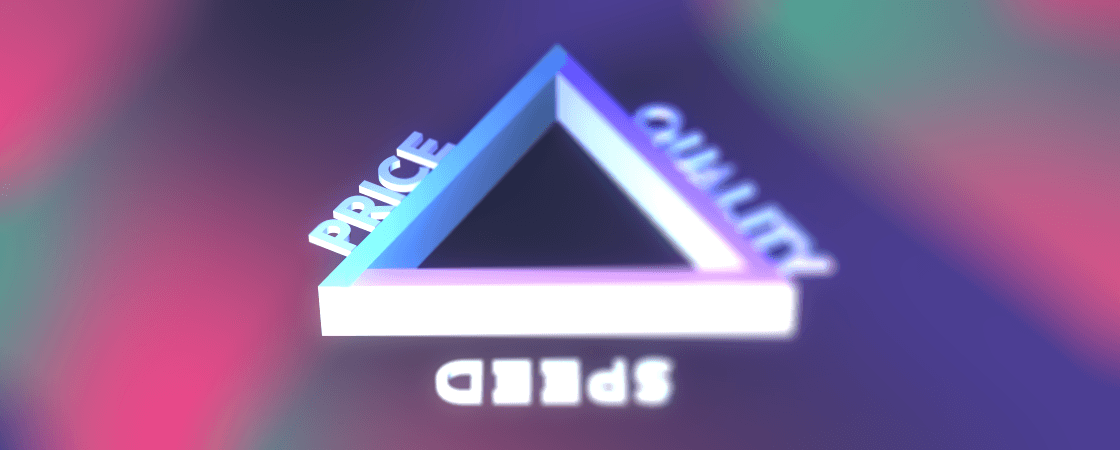
At some point, every marketing or communications team hits the same fork in the road:
“Do we hire an in-house animator… or do we work with an animation studio?”
This question usually shows up right after:
A deadline slipped
A video took way longer than expected
Or someone said, “This should be easy, right?”
Spoiler: there’s no universally “right” answer. There is, however, a better answer for your situation, and that’s what this guide is for.
Below, we’ll break down the real strengths and weaknesses of each option, do a quick bandwidth reality check, look at how timelines actually behave (not how we wish they behaved), and end with a practical checklist you can use immediately.
Option 1: In-House Animation
Great control. Hidden constraints.
Having animation talent in-house sounds like a dream:
Faster turnaround
Deep brand knowledge
No vendor onboarding
And honestly? When it works, it really works.
Strengths of In-House Animation
Brand fluency: No one knows your guidelines like your own team.
Tight feedback loops: Slack message, change… done.
Lower per-asset cost (once salaries are sunk): Especially for repeat content.
Where In-House Teams Often Struggle
Single-threaded bandwidth: One person ≠ five disciplines.
Style ceiling: Hard to cover 2D, 3D, character, motion systems, data viz, and sound design.
Context switching tax: Meetings, emails, revisions, timelines. Animation rarely gets uninterrupted time.
In-house teams tend to shine at ongoing, predictable content: social clips, internal videos, updates, templates.
They struggle most when the ask suddenly becomes:
“We need a high-stakes piece that represents the brand for the next two years.”
Option 2: Animation Studios
Scalable power. Less day-to-day control.
Studios exist for one reason: to make complex animation projects happen reliably.
You’re not hiring a person. You’re hiring a system.
Strengths of Working With a Studio
Built-in specialization: Direction, design, motion, production, audio.
Parallel workflow: Multiple parts move at once instead of sequentially.
Process maturity: Clear milestones, approvals, and delivery paths.
Fresh perspective: External teams spot clarity gaps internal teams miss.
Trade-Offs to Be Aware Of
Upfront alignment time: Discovery time matters.
Higher per-project cost: You’re paying for experience and risk reduction.
Less improvisation mid-stream: Changes are possible, they're just structured.
Studios are strongest when you need:
External credibility
Narrative clarity
Stakeholder alignment
Or something that has to work the first time
The Bandwidth Reality Check (Be Honest Here)
Before choosing any option, ask this brutally honest question:
“If we added one more video next month, who actually does the work?”
Common signals it’s not an in-house problem:
Your animator is booked for weeks
Revisions pile up during review cycles
“Quick tweaks” become side projects
Quality drops under deadline pressure
Common signals a studio might be overkill:
Content is low-risk and repetitive
Style and format rarely change
Speed matters more than polish
Bandwidth, not headcount, is usually the deciding factor.
Timeline Complexity: Why Bigger Projects Break So Easily
Something no one told you: Animation timelines are not linear.
As complexity increases, timelines don’t stretch, they curve.
What looks manageable on paper becomes fragile when you add:
Multiple stakeholders
Legal or compliance review
Messaging sign-off
Format exports for different channels
Studios are built to absorb that curve.
Solo creators (even great ones) usually aren’t.
This is why “just one more change” feels harmless… until it isn’t.
Quick Decision Checklist
If you’re nodding “yes” to most of these, a studio is probably the better move:
The video is externally facing or high-visibility |
More than one department needs to approve it |
The style is new or elevated |
It needs to live for more than six months |
Timeline risk is not acceptable |
If these feel more true, in-house may be right:
Content is frequent and repeatable |
Stakes are low if something slips |
One or two people approve everything |
Speed matters more than narrative depth |
And yes, many teams land in a hybrid model. That’s often the sweet spot.
So… Which Should You Choose?
Here’s the short version:
In-house is about continuity and speed
Studios are about clarity and scale
The mistake isn’t choosing one.
The mistake is using the wrong one at the wrong moment.
If you want help figuring out where your projects actually fall, or how to structure a hybrid workflow that doesn’t burn anyone out, we can help.
Explore our animation services
See how our production workflow works


Enjoying These Insights?

Advocacy
Copyright ©
Open Pixel Studios, LLC.
All product names, logos, and brands are the property of their respective owners.