How to Build a Multi-Touch Content Path Using One Animation
Dec 18, 2025
•
4
Min Read
Stop Thinking “One Video”
Here’s the great cosmic joke of marketing: people commission one beautiful, high-gloss animation and expect it to magically carry an entire campaign like it’s Gandalf battling a Balrog.
But the truth is far less mystical: no single video, no matter how gorgeous, can move someone from stranger to believer to action-taker on its own.
The good news?
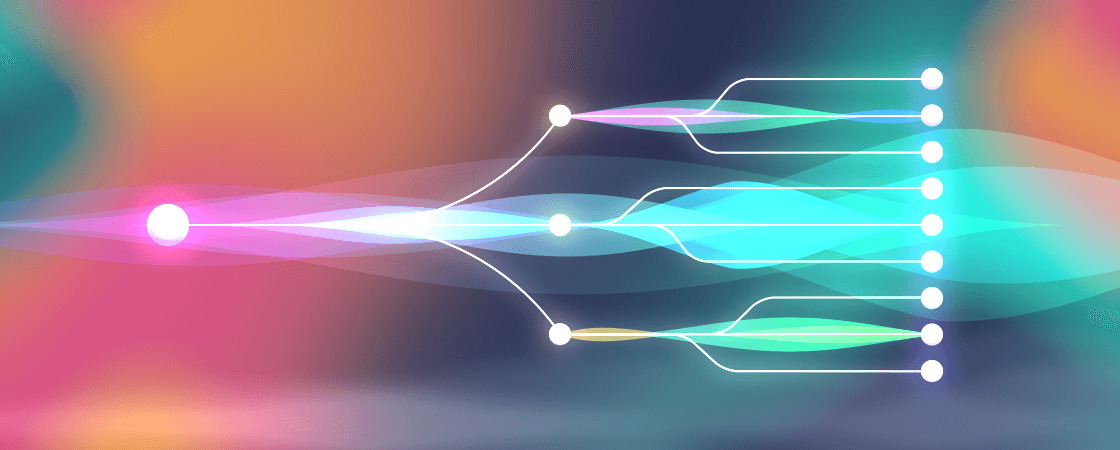
If you build the right flagship animation, you don’t need ten new pieces of content. You just need one video engineered to multiply into a whole content path: educating, nudging, clarifying, and converting at every stage of the funnel.
This is how the grown-ups do “content efficiency.” And it starts with a simple mindset shift:
You’re not making a single video. You’re engineering a system.
The Hero/Micro Content Model
Think of your flagship animation as the hero asset of your cinematic universe. Your “Episode IV,” your Beyoncé album drop.
From that hero, you can spin off:
Short clips (5–15s) for awareness
Explainers that isolate one idea or feature
Cut-downs for ads, landing pages, and cold outreach
Looping GIFs for newsletters
Stills, graphics, diagrams for slides, social, and blogs
Quote cards pulled directly from the script
Mini-teachings for SME spotlights or internal posts
When the animation is intentionally structured for modularity, beats, chapters, distinct visual metaphors, it becomes a library of reusable assets.
It’s not “one video.”
It’s a content ecosystem wearing a trench coat and sunglasses.
Funnel-y (Enough) Strategy
A single animation can, and should, create gravity across every stage of your funnel. Here’s how it breaks down:
Top Funnel (Awareness)
Goal: Get people to stop scrolling, look up from their existential dread, and realize you exist.
Here you can use:
6–10s clips
Visual metaphors
Animated hooks
Carousel graphics
GIFs for newsletters
Mid-Funnel (Education & Consideration)
Goal: “Okay, I’m listening… show me you’re not like the last brand who ghosted me.”
Here you can use:
30–60s cutdowns
Process breakdowns
Feature-specific explainers
Blog graphics
SME commentary videos using animation snippets
Tone: helpful, trustworthy, “here’s how this actually works.”
Bottom Funnel (Conversion)
Goal: “Let’s do this. Where do I click?”
Here you'll want:
Testimonials blended with animation
Problem/Solution clips
Case study visuals
Landing-page hero loops
Personalized walk-through snippets
A single animation, when storyboarded with modular beats, feeds every layer of this funnel without you needing to reshoot, rewrite, or reinvent.
Example Campaign Breakdown
Let’s say you produced a 60-second animation that explains how your climate-tech product turns data into meaningful action.
Here’s how that one hero becomes an entire campaign:
From the Animation:
1 hero video (60s)
3 chapter-based cutdowns (20–30s)
8 micro clips (5–10s)
4 looping GIFs
1 visual metaphor series (3–5 panels)
10+ still frames for blogs, decks, and LinkedIn posts
1 hero loop for web homepage
Deployed Across a Real Campaign:
LinkedIn (organic): 5 weeks of posts
Paid ads: 2–3 test variants per audience
Website: homepage loop and landing-page cutdown
Sales: a 20s “problem/solution” clip embedded in outbound
Email campaign: a GIF in the newsletter + 1 MOFU explainer
Events: still frames and loops for slides
Internal onboarding: a simplified version repurposed for staff training
All of that from one strategically built video. Not ten shoots. Not twelve approvals. Just one intelligent foundation with many children.
Content Multiplication Checklist
Use this while planning your hero animation to guarantee it gives you months of content:
Structural | Technical | Strategic |
|---|---|---|
🔘 Does the script break into clear chapters? | 🔘 Is it animated at a high enough resolution for cropping? | 🔘 Which TOFU/MOFU/BOFU touchpoints will each moment serve? |
🔘 Are there distinct visual metaphors? | 🔘 Are assets layered for reuse (AE/PS/AI/PNG sequences)? | 🔘 Have you defined your audience(s)? |
🔘 Are scenes modular, not one continuous long shot? | 🔘 Did you capture still-worthy frames intentionally? | 🔘 Is the CTA flexible enough to change per context? |
🔘 Is pacing varied (fast hooks w/informative beats)? | 🔘 Is the VO clean enough to isolate quotes? | 🔘 Does each micro-piece solve a real question or hesitation? |
🔘 Is there at least one evergreen explanation? |
If you check all these boxes, the animation becomes a machine. One that prints out content weeks after delivery.
Download the Repurposing Framework (PDF)
If you want your next animation to produce way more more content without way more work, grab the free Repurposing Framework PDF.
It walks you through planning your hero asset, identifying repurposing beats, and mapping micro-content directly onto your funnel.

Enjoying These Insights?
Advocacy
Copyright ©
Open Pixel Studios, LLC.
All product names, logos, and brands are the property of their respective owners.